

Toxic Ingredients in Lip Balm: A Mindful Checklist for Canadian Shoppers
What if the very ritual you use to soothe your skin is actually the source of its distress? It's a quiet irony that many Canadians reach for a tube of balm every 30 minutes, yet their lips remain perpetually parched. This cycle often stems from hidden toxic ingredients in lip balm that act as irritants rather than healers. You likely choose your skincare with intention, seeking purity and peace; however, labels containing over 25 synthetic compounds can cloud even the most mindful shopping experience. Research suggests the average person may ingest nearly 1.8 kilograms of lip product throughout their life, making the purity of these formulas essential to your holistic well-being.
You deserve a moment of self-connection that truly nourishes without compromise. We'll help you decode those complex lists by providing a clear checklist of chemicals to avoid and explaining how they disrupt your skin's delicate balance. You'll learn to curate a luminous, botanical-led routine that favors simple, high-performance plants over harsh synthetics. This guide transforms your search for hydration into an educated journey toward uncomplicated beauty and lasting lip health across the Canadian seasons.
Key Takeaways
Understand the unique physiology of your lips and why the ingredients you unknowingly ingest demand a higher standard of botanical purity.
Uncover the seven most common toxic ingredients in lip balm that may be disrupting your endocrine system and compromising your skin’s natural barrier.
Master the skill of decoding INCI labels to choose life-giving emollients like shea butter over the "fake" hydration of petroleum byproducts.
Discover how to elevate your skincare into a mindful ritual that aligns with a philosophy of uncomplicated, transparent beauty for every Canadian.
Table of Contents The Hidden Vulnerability of Your Smile: Why Lip Balm Ingredients Matter The Essential Checklist: 7 Toxic Ingredients to Avoid in Your Lip Care Beyond the Label: Understanding Endocrine Disruptors and Barrier Health The Art of the Minimalist Label: How to Curate a Safe Lip Ritual Embracing Botanical Synergy: The Puur Philosophy for Luminous Lips
The Hidden Vulnerability of Your Smile: Why Lip Balm Ingredients Matter
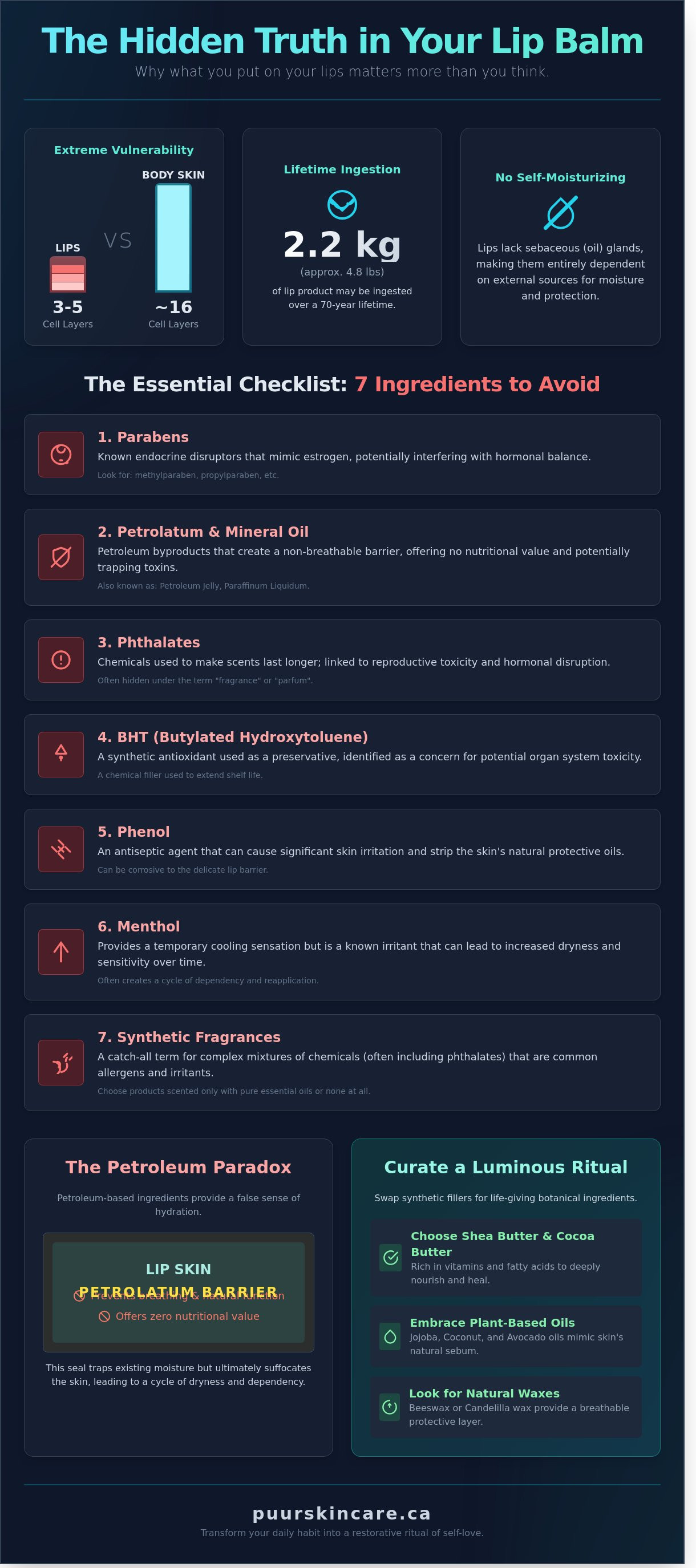
Your smile is often the first point of connection with the world. It's a delicate landscape of expression and sensation, yet we rarely consider the unique physiology that makes our lips so vulnerable. Unlike the skin on your arms or legs, which boasts up to 16 layers of protection, the skin on your lips consists of only three to five cellular layers. This structural thinness provides a direct pathway for what we apply to reach our internal systems. Because lips lack sebaceous glands, they cannot produce the moisturizing oils that protect the rest of our face from the elements.
The concern regarding toxic ingredients in lip balm isn't just about surface irritation. It's about ingestion. Research published in Environmental Health Perspectives indicates that frequent users of lip products may ingest up to 87 milligrams of product every day. Over a lifetime of 70 years, this adds up to approximately 2.2 kilograms of balm or gloss. In the Canadian context, where the harsh winter air often demands constant reapplication, the purity of these ingredients becomes a matter of systemic health. Defining 'toxic' requires a nuanced understanding of Canadian safety standards. While Health Canada maintains a rigorous Hotlist of prohibited substances, many ingredients allowed in small concentrations can still cause long-term concern when applied to such a thin membrane.
Absorption and the Mucous Membrane
Because the lips are a transition zone between external skin and internal mucous membranes, chemicals enter the bloodstream with ease. The lip barrier lacks natural sebum and relies entirely on external nourishment to maintain its integrity. At Puur Skincare, we believe that barrier health is the foundation of a luminous life. We view toxicity through the lens of bioaccumulation. If an ingredient cannot be naturally processed by your body, it doesn't belong in your daily ritual.
The Cumulative Effect of Daily Application
The average Canadian reaches for their lip balm between two and ten times daily. While a single application contains a trace amount of preservatives or synthetic fragrances, the 'chemical load' builds steadily over decades. We invite you to shift your perspective. Lip balm shouldn't be a mindless cosmetic purchase. It's a wellness product that deserves the same intentionality as the food you eat. By choosing botanical synergy over synthetic fillers, you transform a repetitive habit into a restorative ritual of self-love. This transition from habitual application to an intentional skincare ritual is where true healing begins.
The Essential Checklist: 7 Toxic Ingredients to Avoid in Your Lip Care
True beauty thrives in transparency and intention. When you reach for a balm during a crisp Canadian winter, you're seeking a moment of comfort and protection. However, many conventional options contain toxic ingredients in lip balm that compromise your long-term health. Choosing a product should be a restorative ritual, not a source of hidden concern. To protect your luminous smile, it's vital to recognize the components that disrupt your body's natural harmony.
Parabens: Often listed as methylparaben or propylparaben, these preservatives are known endocrine disruptors. They mimic estrogen and can interfere with hormonal balance.
Petrolatum: A byproduct of oil refining that creates a non-breathable barrier on the skin.
Mineral Oil: Like petrolatum, this petroleum derivative offers no nutritional value to the skin.
Phthalates: These chemicals help scents adhere to skin but are linked to reproductive toxicity. They're rarely listed individually on labels.
Butylated Hydroxytoluene (BHT): A synthetic antioxidant used to extend shelf life. The David Suzuki Foundation identifies it as a chemical of concern due to potential organ system toxicity.
Phenol: Often added for its antiseptic qualities, it can cause significant irritation and strip the skin's natural oils.
Menthol: While it provides a familiar cooling sensation, it frequently leads to increased dryness and sensitivity over time.
The Petroleum Paradox
Petrolatum and mineral oil are common staples because they're inexpensive. They create an occlusive seal that traps moisture, but this barrier also prevents the skin from breathing and performing its natural functions. This often triggers a chapped lip cycle where your skin stops producing its own oils, making you dependent on the product. There's also the risk of contamination. Poorly refined petroleum can contain Polycyclic Aromatic Hydrocarbons (PAHs). Since the skin on your lips is 3 to 5 layers thinner than the rest of your face, these impurities absorb quickly into your system. Transitioning to a cleaner lip ritual allows you to enjoy deep nourishment without these hidden risks.
Synthetic Scents and Artificial Pigments
The word "fragrance" on a label is a catch-all for a complex blend of chemicals. The International Fragrance Association lists over 3,000 potential ingredients that don't need to be disclosed to the consumer. For those seeking a vibrant tint, coal tar dyes are often used. These synthetic pigments, labeled with D&C or FD&C followed by a number, can be contaminated with heavy metals like lead or arsenic. Even carmine, a red pigment derived from beetles, may cause allergic reactions in sensitive individuals. Choosing botanical pigments ensures your beauty routine remains kind to both your body and the environment.
Beyond the Label: Understanding Endocrine Disruptors and Barrier Health
Lip care is more than a surface level ritual; it's an intimate interaction with your body's delicate systems. Many Canadians unknowingly apply toxic ingredients in lip balm that penetrate the thin skin of the lips, reaching the bloodstream with surprising speed. Because the skin on our lips lacks the protective sebaceous glands found elsewhere on the body, it acts as a direct gateway for chemicals to enter our internal environment.
Hormonal Harmony and Skincare
Endocrine disruptors are molecules that mimic natural hormones, tricking your body into overreacting or underreacting to its own signals. Oxybenzone, a common chemical filter in SPF-rated balms, is particularly concerning. Research published by the FDA in 2019 showed that oxybenzone is absorbed through the skin in concentrations that exceed safety thresholds after just one application. For those who are pregnant or nursing, these systemic effects are even more significant as these chemicals can persist in the body for weeks. The radiance we seek on the surface is a direct reflection of the chemical peace we maintain within.
Disrupting the Lip Barrier Cycle
The K-beauty philosophy emphasizes the "Barrier Cycle," recognizing that healthy skin requires a consistent, undisturbed rhythm of renewal. While facial skin typically renews every 28 days, lip tissue cycles much faster, often every 3 to 5 days. When you use products containing alcohol, menthol, or phenol, you're not just cooling your lips; you're triggering a cycle of chronic inflammation. These ingredients strip away lipids, leading to a "rebound effect" where the lips feel drier than before.
Common signs that your current balm is compromising your barrier include:
Persistent redness or a tight, stinging sensation upon application.
Chronic peeling that doesn't resolve with increased water intake.
A dependency where you feel the need to reapply every 30 minutes.
Choosing a natural lip balm allows the lip barrier to complete its natural healing cycle without chemical interference. By replacing synthetic waxes with botanical lipids, you provide the deep, luminous nourishment required for long term health. This transition moves your routine away from temporary fixes toward a sustainable ritual of self-love. Eliminating toxic ingredients in lip balm ensures that your smile remains a testament to purity and mindful Canadian living.
The Art of the Minimalist Label: How to Curate a Safe Lip Ritual
Choosing a lip treatment is a quiet act of self-care. When you scan a label, look for a short list of recognizable names. This minimalist approach significantly reduces the risk of encountering toxic ingredients in lip balm. High-quality formulas rely on a synergy of botanical fats. Shea butter and cocoa butter provide deep nourishment, while plant oils like jojoba or almond oil mimic your skin's natural lipids. A 2022 study published in the Journal of Exposure Science & Environmental Epidemiology found that frequent lip balm users may ingest up to 87 milligrams of product daily. This data highlights why every single ingredient matters.
Waxes provide the structural integrity of your balm. Beeswax creates a breathable, protective seal that locks in moisture without clogging pores. For those seeking a plant-based path, candelilla or carnauba wax offer similar benefits. These natural waxes ensure your balm stays on your lips; they provide a durable barrier against the harsh Canadian winter air. A "less is more" philosophy ensures that sensitive skin isn't overwhelmed by complex synthetic fragrances or unnecessary fillers.
Botanical Heroes to Look For
Manuka honey serves as a potent humectant, drawing moisture into the delicate lip tissue to create a luminous finish. Botanical seed oils, such as raspberry or pomegranate, deliver antioxidants that defend against environmental stressors. Instead of synthetic parabens, look for Vitamin E, often listed as Tocopherol. This natural preservative keeps oils fresh while soothing irritation. To enhance your ritual, use a sugar lip scrub twice weekly. This simple step removes dry cells, allowing your balm to penetrate deeper and work more effectively.
Deciphering Technical Names
The International Nomenclature of Cosmetic Ingredients (INCI) can seem daunting. However, long names often hide gentle botanical truths. Butyrospermum Parkii is simply the formal name for shea butter. Helianthus Annuus refers to sunflower seed oil. It's vital to distinguish between alcohols when avoiding toxic ingredients in lip balm. Cetyl or Stearyl alcohols are safe fatty alcohols that provide a creamy texture. Avoid drying alcohols like Isopropyl or Ethanol, which strip moisture away. Shopping at a trusted natural skincare retailer ensures every item has been vetted for purity. A 2022 survey showed that 72% of Canadian consumers now prioritize ingredient transparency over brand name recognition.
Embrace a simpler, more intentional routine by exploring our curated collection of pure lip essentials today.
Embracing Botanical Synergy: The Puur Philosophy for Luminous Lips
Choosing a lip treatment shouldn't be a hurried task. At Puur, we believe in transforming these small moments into a meditative self-care ritual. By moving away from products laden with toxic ingredients in lip balm, you're choosing to honor your body's natural resilience. Our philosophy is rooted in Dutch transparency, where "puur" means pure. We focus on uncomplicated beauty that delivers results through botanical synergy rather than synthetic fillers. This approach ensures that every application provides a moment of quiet connection with yourself.
This philosophy of mindful self-adornment can extend beyond skincare. Just as you choose pure ingredients for your lips, selecting meaningful, handcrafted pieces can enhance your daily ritual. If you're inspired by this approach to beauty, you can learn more about KaMila Fine Jewellery and their unique designs.
Creating Your Morning and Evening Ritual
A luminous pout requires more than a single swipe of product. Start your morning by gently exfoliating with a soft, damp cloth to remove dead skin cells. This prepares the surface for deep hydration. Layering is key. Apply a serum-like hydrating layer first, then seal it with an occlusive natural balm containing plant waxes. This technique mimics the sophisticated routines of K-beauty while utilizing the potent power of Canadian botanicals. By combining these two worlds, you create a barrier that protects against harsh climates while deeply nourishing the delicate skin. Consider these steps for your daily practice:
Exfoliate gently twice per week to encourage cell turnover.
Apply a water-based hydrator to damp lips to lock in moisture.
Seal the surface with a balm rich in fatty acids and vitamins.
The Future of Clean Beauty in Canada
Canadian shoppers are increasingly demanding ingredient integrity. Reports from 2023 indicate that 64 percent of consumers now scrutinize labels for hidden synthetics before making a purchase. This shift drives a more sustainable industry across the country. When you avoid toxic ingredients in lip balm, you're voting for a future where transparency is the standard. We invite you to be part of this movement toward mindful consumption. Finding a trusted partner for your journey ensures your skin remains healthy and vibrant. It's time to choose luxury that respects both your body and the environment. Explore the Puur Skincare collection to find your next intentional ritual.
Cultivating Your Luminous Lip Ritual
Choosing a safe balm is about more than avoiding minor irritation; it's a vital step in protecting your long-term health. Since the average person applies lip care 2 to 8 times daily, these formulas often enter your system directly through the skin's thin barrier. By identifying the 7 toxic ingredients in lip balm highlighted in our checklist, you're reclaiming your well-being. You're opting for long-term barrier health over temporary fixes and ensuring your daily habits support a truly luminous smile.
Canadian shoppers deserve complete transparency and formulas that nourish without compromise. Our minimalist approach focuses on botanical synergy, ensuring every ingredient serves a restorative purpose. As a 100% Canadian-owned boutique, Puur Skincare curates authentic K-beauty essentials that prioritize clean, plant-based formulations. We believe beauty shouldn't be complicated; it should be a quiet, sacred moment of self-connection. Elevate your lip care ritual with Puur Skincare's curated natural collection. Embrace the simplicity of nature's wisdom for your most vibrant self.
Frequently Asked Questions
Is lip balm toxic if you swallow it?
Swallowing small amounts of lip balm isn't typically toxic, but the average person ingests about 24 milligrams of lip product every day. Over a lifetime, this adds up to nearly 2 kilograms of material entering your body. Choosing products free from toxic ingredients in lip balm ensures these trace amounts don't introduce heavy metals or synthetic dyes into your system. Focus on formulas that use food-grade, botanical oils to keep your daily ritual safe and serene.
What is the most harmful ingredient in lip balm?
Mineral Oil Saturated Hydrocarbons (MOSH) are a primary concern for many Canadian shoppers because they can accumulate in human organs. The European Food Safety Authority identifies these as potential health risks when they're present in products we ingest. Some petroleum-based balms contain these contaminants due to insufficient refining processes. We prefer ingredients that nourish the skin without these hidden risks; allowing you to embrace a luminous smile with total peace of mind.
Why does my lip balm make my lips feel drier?
Your lip balm might feel drying because it contains irritants like phenol, menthol, or camphor. These ingredients create a temporary cooling sensation but often strip the delicate moisture barrier from your lips. This leads to a cycle where you apply more product to soothe the dryness the balm itself caused. Switch to a minimalist blend of shea butter and jojoba oil to restore your skin's natural synergy and break the cycle of dehydration.
Are all parabens banned in Canadian skincare?
Health Canada hasn't banned all parabens; instead, they regulate specific concentrations to ensure safety for the public. For instance, methylparaben and ethylparaben are permitted in concentrations up to 0.4 percent. However, many mindful consumers avoid them entirely to prevent potential cumulative exposure over time. We believe in a philosophy of purity; choosing to exclude these preservatives in favor of shelf-stable, natural antioxidants like Vitamin E to keep our formulas fresh.
Is petrolatum safe for daily use on the lips?
Refined petrolatum is considered safe by Health Canada, but its environmental impact and potential for contamination remain points of discussion. The refining process must remove polycyclic aromatic hydrocarbons (PAHs), which are linked to health issues in various studies. If you prefer an uncomplicated beauty routine, you'll find that plant-based waxes provide a cleaner experience. These botanical alternatives offer a breathable barrier that feels lighter and more intentional on your skin throughout the day.
How can I tell if my lip balm has endocrine disruptors?
You can identify endocrine disruptors by scanning labels for ingredients like propylparaben, butylparaben, or the word "fragrance," which often hides phthalates. The Environmental Working Group (EWG) reports that 75 percent of products with "fragrance" contain these hidden chemicals. To simplify your search for toxic ingredients in lip balm, look for transparent brands that list every botanical component. This clarity allows you to transform your skincare into a trusted, daily ritual of self-connection.
What are the best natural alternatives to petroleum jelly?
Shea butter and beeswax are the most effective natural alternatives to petroleum-based occlusives. Shea butter contains high concentrations of fatty acids and vitamins that nourish the skin deeply. Beeswax provides a protective, breathable shield that locks in moisture for up to 8 hours. These ingredients work in harmony with your body; offering a luminous finish that synthetic jellies can't replicate while supporting the delicate ecosystem of your skin.
Can I use a face moisturizer on my lips instead of balm?
You can use face moisturizer on your lips, but it won't provide the long-lasting protection of a dedicated balm. Facial creams are designed to penetrate the skin, while lips lack oil glands and need a thicker barrier to prevent moisture loss. Applying a rich, botanical balm after your moisturizer creates a perfect synergy. This simple step seals in hydration and elevates your evening routine into a restorative moment of self-care before you sleep.


Comments