
Korean Sunscreen vs Western Sunscreen: How Does Protection Compare
The better sunscreen isn’t decided by where it was made. In the Korean sunscreen vs Western sunscreen comparison, SPF measures UVB protection, while the PA rating grades UVA protection from PA+ to PA++++. SPF 50 carries the same meaning regardless of a sunscreen’s country of origin, so the label and how comfortably you can apply enough matter more than the category.
It’s understandable to look for a sunscreen that feels light and wears comfortably, especially if white cast, sensitivity or a greasy finish makes daily use less appealing. This guide compares Korean sunscreen vs Western sunscreen, explains how to read SPF and UVA labels, and explores how texture can affect everyday wear. You’ll find practical criteria for weighing options, including when a water-resistant formula may suit swimming or a long day of sport.
Table of Contents
UVB and UVA protection
SPF and UVA labels describe different aspects of sunscreen protection. Understanding both helps you compare products, but applying enough sunscreen remains essential.
Regional UVA Protection Labels
Korean products may use PA ratings; European guidance recommends UVA protection of at least one-third of labelled SPF and a critical wavelength of at least 370 nm. SPF testing is standardized internationally, so SPF 50 means the same thing regardless of origin. A direct conversion between PA and Canadian or U.S. labels isn’t provided by these ratings.
For imported Korean sunscreen, check the label carefully. PA describes UVA protection, but it does not by itself establish Canadian regulatory status. Review the full package information, including ingredients and directions.
UVA Ratings and the PA System
PA grades UVA protection from PA+ to PA++++. Higher grades indicate stronger UVA protection, with PA++++ the highest level in Korea’s system.
Compare the UVA label as well as SPF. One rating does not replace the other.
Protection Under Real-World Application
Sunscreen testing commonly uses 2 mg per square centimetre of skin. Applying less can reduce protection: SPF 50 may behave like SPF 15 when used below the tested amount. A lightweight, non-greasy finish can make generous application easier, including under foundation or on sensitive skin.
UVA, UVB, and Visible-Light Coverage
SPF measures protection against UVB rays associated with sunburn, while PA indicates UVA protection. Neither rating alone describes visible-light coverage. Ingredients such as centella do not replace labelled UV filters. Choose a product with stated coverage that suits your needs, then apply it evenly.
Korean Sunscreen vs Western Sunscreen: Which Protects Asian Skin Better?
No regional formula automatically protects Asian skin better. Consider your skin type, pigmentation concerns, the product’s labelled protection and whether its texture feels comfortable enough for regular use. A Korean, American or European sunscreen can work in a daily routine if its finish suits you.
For oily skin, a lighter texture may feel more comfortable under makeup; a richer formula may suit skin that feels dry. Sensitive skin can react to ingredients or botanical extracts, so introduce a new formula carefully and stop using it if irritation occurs. Centella does not guarantee that a product will suit every complexion.
White cast is another practical consideration. Some Western formulas, particularly mineral sunscreens, may leave a noticeable cast, which can be more visible on deeper skin tones. Korean formulas may have a different feel or finish, but results depend on the product and how it blends. Try the texture in your routine, including under foundation, before relying on it for daily wear.
For swimming or a long day of sport, choose a water-resistant sunscreen. For everyday use, prioritize a finish that lets you apply enough and reapply comfortably. A high rating offers little practical benefit if a greasy feel leads you to use too little. Sunscreen may help limit UV-related pigmentation, but it does not replace shade or protective clothing.
In Canada, prices for Korean and Western sunscreens vary by product and retailer, so neither category has a single set cost. Both are sold through Canadian retail stores and online sellers. Compare labelled protection, ingredients and suitability for your routine.
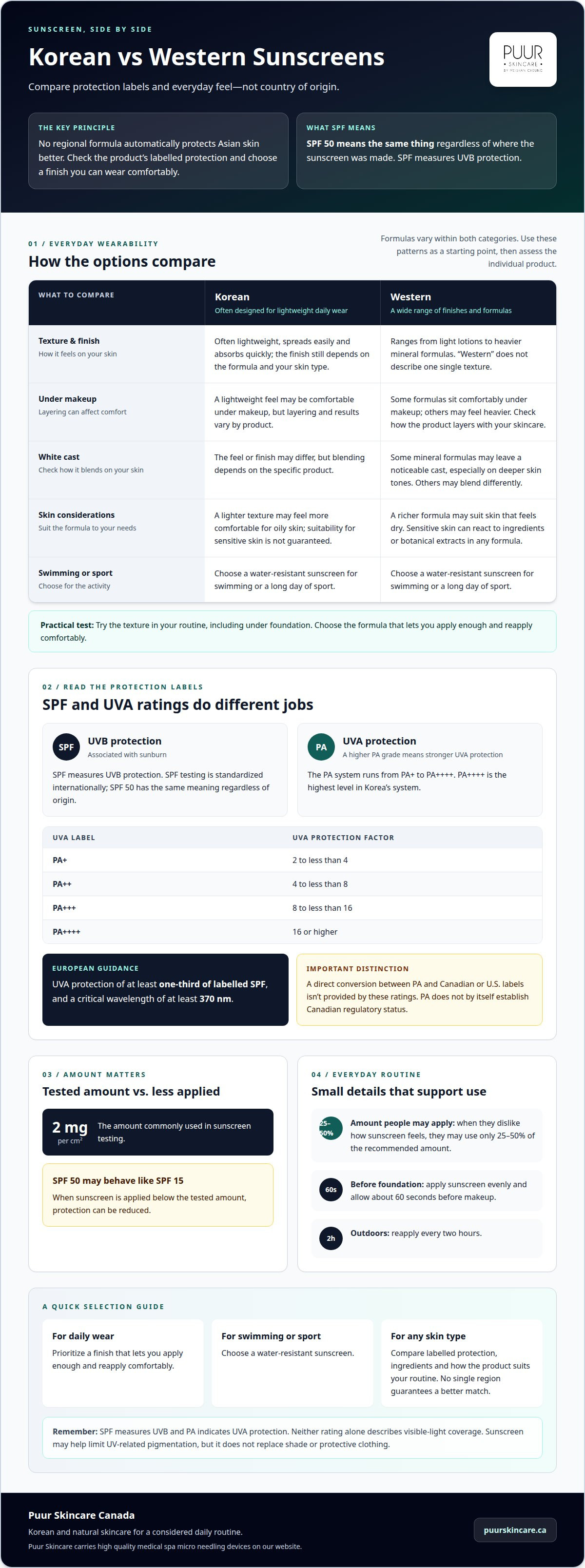
Everyday wearability of Korean and Western sunscreens
Texture can determine whether sunscreen becomes a regular part of your routine. Korean formulas often emphasize lightweight daily wear, while Western options vary in finish and feel.
Korean Sunscreen Wearability
Korean sunscreens are often designed with lightweight textures that spread easily and absorb quickly, making them comfortable under makeup. This daily-wear focus may suit people who prefer a less heavy feel, though the finish varies by formula and skin type. A pleasant texture can support regular use, but it does not guarantee suitability for sensitive skin or an even blend on every complexion.
Think of sunscreen as part of skincare, not a final occasional step. Korean sunscreen is often worn 365 days a year, so a finish you enjoy can help make daily application feel natural.
Western Sunscreen Wearability
Western sunscreens also range from light lotions to heavier mineral formulas. Some mineral sunscreens may leave a visible white cast, especially on deeper skin tones; others may sit comfortably under makeup. “Western” does not describe a single formula, so the finish, filters and how the sunscreen layers with your skincare matter more than its region of origin.
Some Western sunscreens have traditionally been associated with beach use, but everyday sun exposure calls for a product you’ll use consistently. Whichever style you choose, select a water-resistant formula for swimming and reapply every two hours outdoors.
Comfort has a practical effect: people may apply only 25-50% of the recommended amount when they dislike sunscreen’s feel. Try a thin layer of skincare first, then apply sunscreen evenly before makeup. Allow about 60 seconds before foundation. Ingredients such as niacinamide don’t replace broad-spectrum protection, and no texture removes the need to apply generously. Choose the formula you can wear comfortably and reapply reliably.
Puur Skincare Canada
Puur Skincare Canada offers Korean and natural skincare for readers exploring products that fit a considered daily routine. Its website also carries high quality medical spa micro needling devices. These options offer a natural next step for readers interested in skincare products and tools.
Natural Lip Balm can complement everyday lip care, while skincare products and micro needling devices serve different roles in a routine.
For questions about its offerings, contact Puur Skincare Canada. Explore at your own pace and choose what feels right for your routine.
Build a sun care routine that feels like yours
Choose a formula you can wear comfortably instead of treating its country of origin as a shortcut. The Korean sunscreen vs Western sunscreen question is a starting point, not a rule for every complexion. Your routine, preferred finish and comfort all shape what feels practical day after day.
As your skincare habits evolve, notice which textures layer well and which products you use consistently. Puur Skincare Canada offers natural and Korean skincare, along with Natural Lip Balm for everyday lip care. Keep sunscreen as its own essential step; other skincare products do not replace it.
Contact Puur Skincare Canada to explore its skincare selection. A thoughtful routine can begin with one comfortable choice and grow at your own pace.
Frequently Asked Questions
Are modern Korean UV filters better?
Not automatically. Filter technologies and product formulas vary, so compare each sunscreen’s labelled protection rather than assuming one region’s products are better. This describes differences between filter systems, not guaranteed protection in everyday use. Compare each product’s labelled SPF and UVA rating, then consider whether its texture lets you apply it comfortably and consistently.
Which sunscreen should you choose?
Choose a broad-protection sunscreen with at least SPF 30, then match its finish to your routine. For swimming or a long day of sport, choose a water-resistant formula. For daily wear, consider whether it layers comfortably with skincare or makeup. The best practical option is one you’ll apply generously and keep using.
What do SPF and PA actually mean?
SPF indicates protection against UVB rays, which cause sunburn; PA grades UVA protection. For example, PA++++ means a UVA protection factor of 16 or higher. SPF and PA aren’t interchangeable, so consider both when comparing labels. A high rating also doesn’t mean you can stay outdoors longer without reapplying.
Which One Is Better for Your Skin?
Neither origin is automatically better for every complexion. If your skin is sensitive, consider the full ingredient list and how the formula feels during regular use. For deeper skin tones, a visible white cast may affect how comfortable you feel wearing a sunscreen. A comfortable finish can make daily use easier to maintain.
Why do Korean sunscreens often feel lighter?
Many Korean sunscreens are designed for daily wear, with lightweight textures that spread easily and absorb quickly. This can make them comfortable under makeup or layered with skincare. The feel still varies by product, and a light texture does not determine protection by itself. Choose based on the label and a finish that suits your routine.


Comments