
Ingredients to Avoid in Hair Care: A Canadian Guide to Mindful Selection in 2026
A recent survey indicates that 74% of consumers now scrutinize labels for ingredients to avoid in hair care Canada before making a purchase. This shift toward mindful selection reflects a growing awareness that our daily rituals should nurture rather than disrupt our natural balance. It's often discouraging to experience chronic scalp itchiness or dull hair, especially when you've chosen products that promise luxury. You likely seek a sense of peace and clarity when reading your ingredient lists, wanting to ensure every component serves a restorative purpose for your well-being.
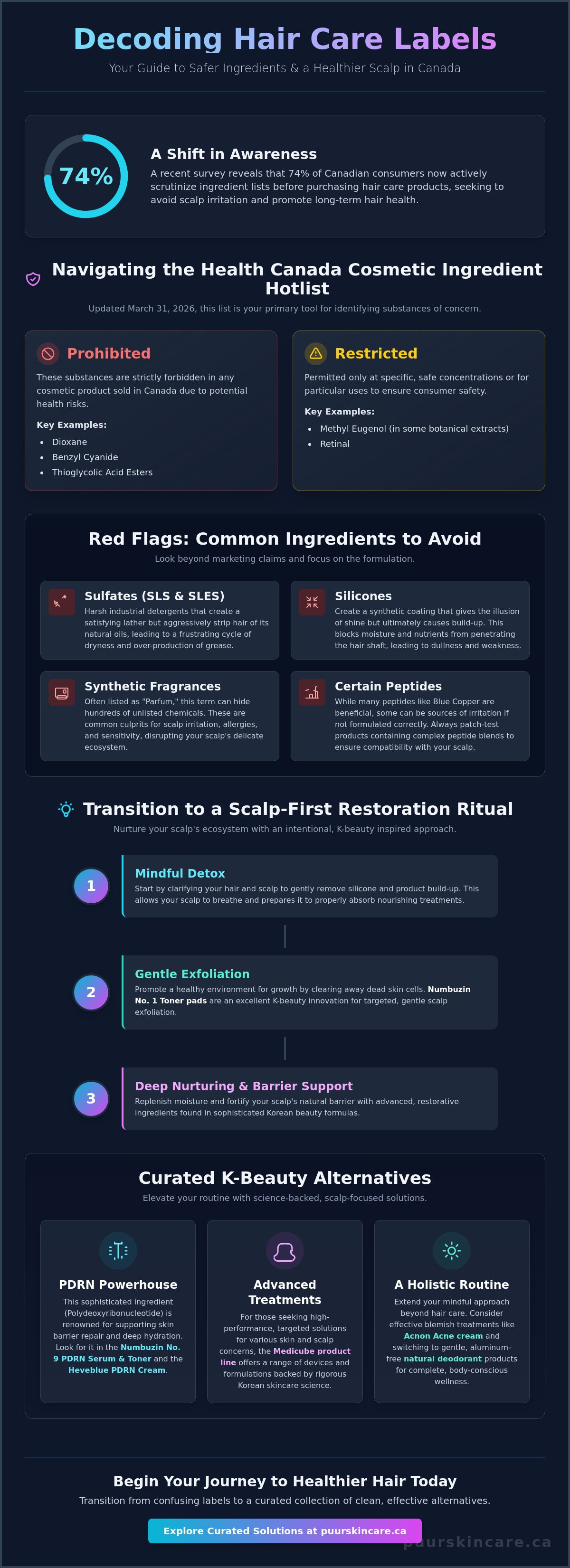
This guide provides the knowledge you need to navigate the March 31, 2026, Health Canada Cosmetic Ingredient Hotlist updates with confidence. You'll discover how to identify red flag substances like Thioglycolic Acid Esters and Dioxane while learning to embrace restorative, scalp-focused alternatives. We'll explore the transformative power of intentional ingredients, from Blue Copper peptides to the sophisticated Korean beauty science found in the Numbuzin No. 9 PDRN Serum and Heveblue PDRN Cream. By the end of this article, you'll have the tools to transition to a ritual that fosters genuine radiance and long-term hair health.
Key Takeaways
Learn to navigate the 2026 Health Canada Hotlist updates to distinguish between prohibited toxins and restricted components for a safer, more transparent routine.
Uncover the hidden impact of industrial detergents and synthetic fragrances, identifying the essential ingredients to avoid in hair care Canada to protect your scalp's delicate ecosystem.
Master a gentle restoration ritual that begins with a mindful detox to clear silicone build-up and invite deep, botanical hydration back into every strand.
Explore the healing potential of K-beauty innovations, including the use of Numbuzin No. 1 Toner pads for intentional scalp exfoliation and barrier support.
Transition from confusing labels to a curated collection of clean alternatives that align with a holistic, eco-conscious approach to self-care.
Table of Contents
Navigating the Canadian Landscape of Hair Care Safety
The Canadian landscape for personal care is currently undergoing a significant shift toward transparency. Health Canada serves as the primary guardian of our safety through the Cosmetic Ingredient Hotlist. This living document was last updated on March 31, 2026, to reflect new scientific data on chemical safety and environmental impact. Understanding this list is the first step in identifying ingredients to avoid in hair care Canada, as it separates substances into two distinct categories: prohibited and restricted. This distinction helps us make informed choices that honor our body's natural state.
Prohibited substances are strictly forbidden from appearing in any retail product. Recent 2026 updates have blacklisted chemicals like Dioxane and Benzyl Cyanide due to their potential health risks. Restricted ingredients, however, occupy a more nuanced space. These are permitted only at specific concentrations or for particular uses. For example, some botanical extracts may contain trace amounts of Methyl Eugenol, which is now heavily restricted to ensure consumer safety. By recognizing these categories, you move from a place of confusion to one of quiet confidence.
Decoding the Cosmetic Ingredient Hotlist
Health Canada's approach is often more stringent than American standards, aligning more closely with European Union regulations. By monitoring the International Nomenclature of Cosmetic Ingredients (INCI) on your labels, you can discern the true nature of what you apply to your scalp. In 2026, the Hotlist has expanded to include restrictions on Retinal and the prohibition of Thioglycolic Acid Esters. These changes reflect a commitment to preventing skin sensitization and long-term irritation. It's a reminder that the safety of our daily rituals requires constant vigilance and expert guidance.
The word "natural" often appears on bottles as a marketing promise rather than a regulated standard. It's essential to look past evocative imagery and focus on the actual formulation. A product can be labeled as natural while still containing harsh industrial detergents that strip your hair of its inherent vitality. This is why we prioritize clear, evidence-based selection over aggressive marketing claims.
The Philosophy of Mindful Ingredient Selection
True hair health begins at the root. We believe in shifting the focus from simply "cleaning" the hair to nurturing the entire scalp environment. This transition requires a slower, more intentional approach to curation. When you choose products with a scalp-first mindset, you invite a restorative energy into your daily life. You can explore more about this journey in our natural skincare guide, which details the foundations of mindful beauty.
Adopting a K-beauty philosophy often provides a path toward this balance. Formulations like the Numbuzin No. 9 PDRN Serum, the Numbuzin No. 9 PDRN Toner, or the Heveblue PDRN Cream prioritize barrier support and deep hydration. By integrating high-performance items such as Numbuzin No. 1 Toner pads or the Medicube product line into your routine, you treat your scalp with the same sophistication usually reserved for facial care. This meditative approach extends beyond hair care to every facet of your ritual, from using a natural deodorant without baking soda to treating blemishes with Acnon Acne cream. This level of intentionality ensures that your search for ingredients to avoid in hair care Canada leads you toward a practice of genuine self-connection and health.
Industrial Detergents and Preservatives to Avoid
Many mass-market formulations found across Canada rely on industrial detergents to create an artificial sense of cleanliness. These surfactants, primarily Sodium Lauryl Sulfate (SLS) and Sodium Laureth Sulfate (SLES), are among the most common ingredients to avoid in hair care Canada if you wish to preserve the hair's natural integrity. While they provide a rich, satisfying lather, they do so by aggressively lifting the hair cuticle. This process allows essential moisture to escape, leaving the strand vulnerable to environmental stress and structural damage. Manufacturers often use these cheap fillers because they're cost-effective, but the long-term cost to your scalp health is significant.
The Sulfate Cycle: Stripping and Re-Greasing
This aggressive stripping often leads to a frustrating cycle of imbalance. When the scalp is deprived of its natural oils, it frequently overcompensates by producing an excess of sebum. This results in hair that feels greasy at the roots yet brittle at the ends, often within twenty-four hours of washing. To break this cycle, we suggest looking for gentle, plant-derived surfactants such as coco-glucoside or decyl glucoside. These components cleanse without disrupting the delicate scalp barrier, fostering a state of calm and resilience. Many people find that persistent scalp redness or irritation begins to fade once they remove these harsh detergents from their ritual.
Preservatives and Phthalates: The Invisible Risks
Beyond detergents, the preservatives used to extend shelf life deserve careful scrutiny. Health Canada maintains the Cosmetic Ingredient Hotlist to monitor substances that may pose risks, such as certain formaldehyde-releasing agents. These preservatives, often hidden under complex names like DMDM hydantoin, can trigger persistent scalp allergies. Similarly, Methylisothiazolinone is a known sensitizer that can cause significant discomfort for those with reactive skin. By choosing a natural deodorant without baking soda and paraben-free hair care, you reduce the cumulative chemical load on your body.
We also consider the invisible risks of phthalates, which are sometimes used to soften plastic packaging or as solvents in synthetic fragrances. These chemicals can migrate into the product itself, potentially acting as endocrine disruptors. Transitioning away from these industrial fillers allows space for high-performance, skin-identical ingredients found in the K-beauty philosophy. Sophisticated solutions like the Numbuzin No. 9 PDRN Serum or the restorative Heveblue PDRN Cream prioritize the scalp's health over temporary aesthetic fixes. Whether you're integrating the Medicube line or treating a blemish with Acnon Acne cream, every intentional choice brings you closer to a state of holistic well-being and radiant health.
The Complexity of Fragrance and Silicone Build-up
The sensory experience of washing your hair is often defined by evocative scents and the immediate silkiness of the strands. However, these instant rewards frequently come at a hidden cost to your long-term well-being. When we look at the ingredients to avoid in hair care Canada, synthetic fragrances and non-water-soluble silicones stand out as primary contributors to scalp imbalance and hair dehydration. Choosing a more intentional path means looking beyond the immediate "slip" of a product to understand how these components interact with your biology over time.
Unmasking "Parfum" in Canadian Hair Care
The term "Fragrance" or "Parfum" on a label often acts as a legal loophole, allowing manufacturers to hide a complex blend of up to 100 different chemicals under a single word. These undisclosed mixtures are a leading cause of contact dermatitis and scalp sensitivity. As of April 12, 2026, Health Canada requires more transparent disclosure of fragrance allergens, yet many synthetic musks and phthalates remain part of these proprietary scents. These persistent chemicals can linger in your hair and the environment long after you've stepped out of the shower.
To ensure your ritual remains truly restorative, we recommend consulting Health Canada's Cosmetic Ingredient Hotlist to stay informed about restricted aromatic compounds. Transitioning to fragrance-free options or products scented with pure botanical extracts allows you to enjoy a sensory experience without the invisible chemical load. This mindful shift is similar to choosing a natural deodorant without baking soda, where the focus moves from masking odors to supporting the body's natural functions.
Silicones and the Dehydration Paradox
Silicones, specifically Dimethicone, are often used to create an illusion of health by coating the hair shaft in a thin, plastic-like film. While this provides immediate shine and frizz control, it creates a dehydration paradox. This non-breathable barrier prevents genuine moisture from penetrating the hair cuticle, leading to strands that are dry and brittle on the inside despite appearing shiny on the outside. Over time, non-water-soluble silicones accumulate, resulting in heavy, lifeless hair that requires harsh detergents to clean, further perpetuating the cycle of damage.
Breaking this cycle requires a move toward plant-based emollients and skin-identical ingredients that offer a weightless, natural glow. Instead of relying on synthetic coatings, a sophisticated routine focuses on the health of the scalp and the integrity of the hair's protein structure. Integrating high-performance K-beauty solutions can bridge this gap beautifully. For instance, the Medicube line and the Numbuzin No. 9 PDRN Serum utilize advanced science to nourish the scalp environment without the need for heavy silicones. Similarly, the Heveblue PDRN Cream provides deep, meaningful hydration that respects the hair's natural texture. By choosing these intentional alternatives, you replace a temporary aesthetic fix with a foundation of lasting radiance and health.
Transitioning to a Scalp-First Restoration Ritual
Embracing a scalp-first philosophy transforms a routine chore into a meditative act of self-connection. To begin this journey, a detox wash is essential. This step gently dissolves the residual silicone build-up and industrial pollutants that we explored in previous sections. By clearing this synthetic film, you allow your scalp to breathe and absorb nutrients more effectively. Once the surface is clear, you can accurately evaluate your scalp type. Whether you face a compromised barrier or seasonal dryness, understanding your unique needs is the foundation of a mindful ritual that moves beyond the list of ingredients to avoid in hair care Canada.
The Power of PDRN and Peptides for the Scalp
In 2026, PDRN (Polydeoxyribonucleotide) has emerged as the gold standard for tissue recovery and cellular health. This skin-identical ingredient, found in the Numbuzin No. 9 PDRN Serum and the Numbuzin No. 9 PDRN Toner, offers a sophisticated way to support the hair-skin interface. When paired with copper peptides, these formulations encourage follicle resilience and a healthy growth environment. Integrating these advanced treatments into an intentional skin recovery practice ensures that your scalp receives the same level of care as your face. The restorative power of the Heveblue PDRN Cream can also be extended to the hairline, providing deep hydration where it is needed most.
Label Reading 101 for the Canadian Shopper
Reading labels with confidence requires looking past evocative marketing. Many products claim to be natural while still containing the very ingredients to avoid in hair care Canada, such as harsh sulfates or undisclosed parfum. This practice, often called greenwashing, can be deceptive. A quick-reference checklist for your next trip to the beauty aisle should include a search for pH-balanced formulations. Maintaining the scalp's acid mantle is vital for preventing the growth of unwanted bacteria and irritation. We suggest a simple approach to label reading:
Identify the Surfactants: Look for coco-glucoside instead of SLS or SLES.
Check for "Parfum": Seek transparency or essential oil-based scents.
Look for Bio-Actives: Prioritize peptides, PDRN, and botanical extracts.
Your commitment to quality should extend to every part of your personal care. This might include choosing a natural deodorant without baking soda to protect sensitive underarm skin or using Acnon Acne cream from Korea for targeted blemish care. For those seeking to refine their scalp-line, Numbuzin No. 1 Toner pads offer a gentle way to exfoliate and prep the skin. By curating your routine with these intentional choices, you build a stable presence of health in your daily life. Explore our collection of Korean skincare to find the perfect, clean alternatives for your restoration ritual.
Curating Your Routine with Intentional Alternatives
Identifying ingredients to avoid in hair care Canada is merely the first step toward a more mindful daily ritual. Once you've moved away from industrial detergents and synthetic coatings, you create space for the sophisticated K-beauty philosophy of deep hydration and barrier support. This approach treats the scalp with the same reverence as the face, utilizing skin-identical ingredients to foster long-term health. By selecting intentional alternatives, you replace the cycle of stripping and re-greasing with a steady, restorative rhythm that honors your body's natural balance.
For those seeking a refined method to manage the hair-skin interface, Numbuzin No. 1 Toner pads offer a gentle solution for scalp-line exfoliation. These pads help clear away environmental pollutants and dead skin cells without the harshness of traditional scrubs. To address deeper repair, the Numbuzin No. 9 PDRN Serum and Numbuzin No. 9 PDRN Toner utilize advanced cellular science to nourish a compromised scalp. These products shift the focus from temporary aesthetic fixes to genuine tissue recovery, ensuring your foundation is as radiant as your hair.
K-Beauty Innovation: Medicube and Heveblue
The Medicube product line has become a staple for Canadians seeking professional-grade results within their home sanctuary. Their formulations bridge the gap between clinical efficacy and the sensory reward of a self-care practice. To complement this, the Heveblue PDRN Cream provides deep, meaningful moisture for the face and neck, ensuring the skin surrounding your hairline remains resilient. There is a beautiful synergy between Korean skincare for Canadians and holistic hair health. When you nourish the skin barrier with high-performance PDRN and botanical extracts, you support the entire ecosystem of your head and scalp.
Holistic Care: Acne and Personal Hygiene
A serene beauty cabinet is built on the intersection of effective results and ethical standards. This holistic view extends to addressing stubborn breakouts with Acnon Acne cream from Korea, a targeted treatment that respects the skin's integrity while clearing blemishes. Similarly, the transition to a natural deodorant without baking soda or aluminum reflects a commitment to reducing your cumulative chemical load. These small, intentional choices transform routine tasks into moments of self-connection.
Building an intentional beauty cabinet is an unhurried journey. It isn't about a sudden overhaul but a slow, meaningful curation of quality. By choosing products like the Numbuzin No. 1 Toner pads or the Medicube line, you move past the confusion of ingredients to avoid in hair care Canada and toward a lifestyle of transparency. This mindful selection ensures that every bottle on your shelf serves a purpose, bringing a sense of calm and quiet confidence to your daily life.
Embracing a New Standard of Scalp Health
Choosing a path of transparency requires a blend of vigilance and intentionality. By identifying the specific ingredients to avoid in hair care Canada, such as harsh sulfates and undisclosed fragrances, you've taken the first step toward reclaiming your hair's natural vitality. Moving toward a scalp-first ritual allows you to shed the dehydration paradox of silicones and embrace the restorative power of skin-identical components that respect your biology.
As a Canadian-owned and operated curator, we provide a stable presence of quality and transparency in your self-care journey. We've gathered an authentic selection of K-beauty innovations, focusing on high-performance PDRN and barrier repair technology to support your health. Whether you use Numbuzin No. 1 Toner pads for gentle exfoliation or the Medicube line for advanced care, every choice reinforces your dedication to holistic well-being and the beauty of simplicity.
Explore our curated collection of mindful hair and skincare to discover how simplicity and science can transform your daily habits into meaningful moments of self-connection. You deserve a routine that feels as radiant as it is safe.
Frequently Asked Questions
Is Health Canada’s Cosmetic Ingredient Hotlist updated regularly?
Yes, the Cosmetic Ingredient Hotlist is a living document that Health Canada updates frequently to reflect the latest scientific safety data. The most recent comprehensive update occurred on March 31, 2026. These revisions are crucial for consumers who want to stay informed about the latest ingredients to avoid in hair care Canada, including newly restricted substances like Retinal and prohibited chemicals like Dioxane.
Can "Fragrance" in hair care products cause hair loss?
While synthetic fragrance doesn't directly cause hair to fall out, it is a primary trigger for scalp inflammation and contact dermatitis. Chronic irritation can stress the hair follicles, which may lead to thinning over time. Choosing fragrance-free products or those scented with pure botanical extracts helps foster a peaceful, healthy environment that supports natural hair growth and scalp resilience without relying on harsh chemicals.
Are all silicones bad for Canadian hair types?
Not all silicones behave the same way, but non-water-soluble types like Dimethicone often create a stubborn film on the hair shaft. This barrier prevents moisture from penetrating, which is especially challenging during dry Canadian winters. We recommend moving away from these synthetic coatings in favor of breathable, plant-derived emollients that provide a weightless glow without causing long-term dehydration or heavy, lifeless build-up.
What is PDRN and why is it used in scalp care?
PDRN, or Polydeoxyribonucleotide, is a DNA-derived ingredient celebrated for its ability to accelerate tissue repair and soothe inflammation. In 2026, it serves as a cornerstone for advanced scalp care. Formulations such as the Numbuzin No. 9 PDRN Serum and Heveblue PDRN Cream use this technology to restore a compromised scalp barrier, offering a more sophisticated approach than traditional, surface-level treatments found in mass-market products.
How do I know if my shampoo has formaldehyde-releasing preservatives?
You can spot these preservatives by scanning your label for names like DMDM hydantoin, Imidazolidinyl urea, or Quaternium-15. These chemicals slowly release small amounts of formaldehyde to prevent bacterial growth but can cause significant scalp sensitivity. Identifying these is a vital part of recognizing ingredients to avoid in hair care Canada to ensure your cleansing ritual remains gentle and non-irritating for your delicate scalp environment.
Can I use K-beauty toners like Numbuzin on my hairline?
Applying K-beauty toners to your hairline is an excellent way to nurture the skin where your hair begins. Using Numbuzin No. 1 Toner pads or the Numbuzin No. 9 PDRN Toner provides gentle exfoliation and deep hydration for this often-neglected area. This intentional step helps prevent congestion. If you experience breakouts in this region, you might also consider the targeted support of Acnon Acne cream from Korea.
Why should I avoid baking soda in my natural deodorant?
Baking soda is a highly alkaline substance that can disrupt the delicate pH balance of your skin's acid mantle. This disruption often leads to redness, itching, and uncomfortable rashes in the underarm area. Our natural deodorant without baking soda relies on gentle, mineral-based alternatives. This choice supports your body's natural functions while maintaining a state of calm and comfort throughout your daily life.
What is the best way to detox my hair from synthetic ingredients?
The most restorative way to detox your hair is to use a gentle, sulfate-free clarifying wash that dissolves silicone build-up without stripping essential oils. After cleansing, follow with a nourishing treatment like our Hair & Scalp Serum with Blue Copper peptides to replenish the scalp's vitality. This process clears the path for better absorption of high-performance ingredients, transforming your routine into a meaningful moment of self-connection and health.


Comments