
How to Protect Your Skin from the Sun: A Practical 2026 Guide
What if sun care could be simpler than the advice makes it sound? Learning how to protect your skin from the sun can feel confusing, especially when you’re unsure how much sunscreen to apply or when to reapply. UV exposure isn’t limited to hot, cloudless days.
A layered routine makes protection practical across Canada. This guide covers how UV exposure affects skin, how to choose broad-spectrum sunscreen with SPF 30 or higher, how much to apply and when to reapply, and how clothing, shade and sunglasses add protection. You’ll also find gentle after-sun care guidance and signs that warrant medical advice. Natural and Korean skincare from Puur Skincare Canada can complement daily care, but only a product labelled as sunscreen should be relied on for sun protection.
Table of Contents
How Sun Exposure Affects Skin, and What Protection Actually Means
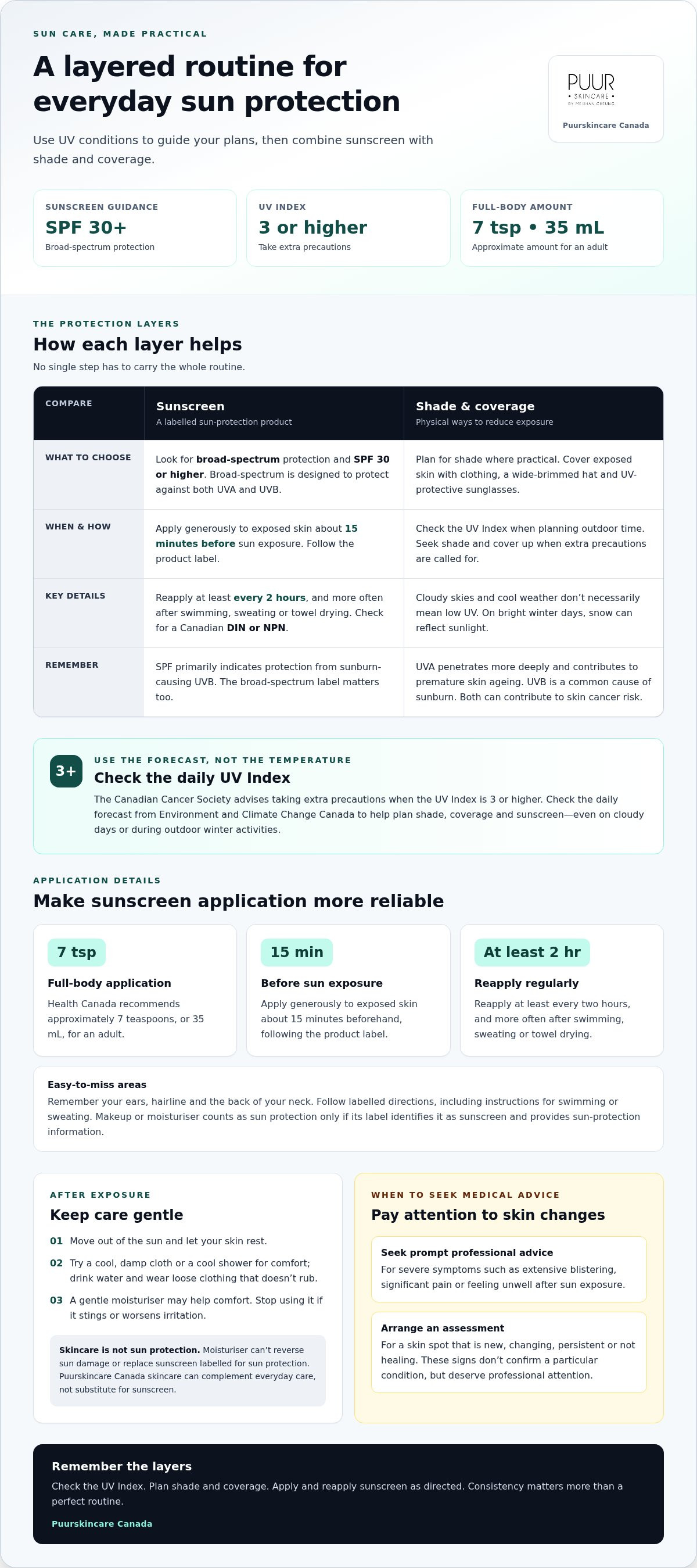
Sun protection means reducing how much ultraviolet (UV) radiation reaches your skin. It works best as a combination of habits: use sunscreen labelled for sun protection, seek shade, cover exposed skin with clothing and consider UV conditions when planning time outdoors. No single step has to carry the whole routine.
Two kinds of UV radiation matter for skin. UVA rays penetrate more deeply and contribute to premature skin ageing. UVB rays are a common cause of sunburn. Both can contribute to skin cancer risk. Because some effects aren’t immediate, avoiding a burn doesn’t mean you’ve avoided all UV exposure.
Broad-spectrum sunscreen is designed to protect against both UVA and UVB rays. Health Canada recommends broad-spectrum sunscreen with SPF 30 or higher. SPF primarily indicates protection from sunburn-causing UVB, so broad-spectrum labelling matters too. For a general overview of sunscreen types and how they work, see Understanding Sunscreen.
Does sun protection matter on cloudy days or during Canadian winters?
Cloud cover and cool air don’t necessarily mean UV exposure is low. Check the daily UV Index from Environment and Climate Change Canada when planning time outside. The Canadian Cancer Society advises taking extra precautions when the UV Index is 3 or higher. On bright winter days, snow can reflect sunlight, so consider your exposure during outdoor activities even when temperatures are low. Use the forecast to guide decisions about shade, covering up and sunscreen rather than relying on how warm or bright the day feels. This is a practical first step in learning how to protect your skin from the sun year-round.
How to Protect Your Skin from the Sun: A Simple Daily Routine
A few deliberate steps make sun care easier to follow. Use this sequence before heading outdoors, whether you’re taking a walk or spending the afternoon outside.
Check UV conditions. Look at the UV Index in your weather forecast to help plan the protection you’ll need.
Plan shade and coverage. Choose shade where practical, and cover exposed skin with clothing, a wide-brimmed hat and UV-protective sunglasses. The CDC Sun Safety Guidelines explain how these habits work alongside sunscreen.
Apply sunscreen labelled for sun protection. Health Canada recommends broad-spectrum sunscreen with SPF 30 or higher. Apply it generously to exposed skin about 15 minutes before sun exposure, following the product label. Don’t overlook areas such as your ears, hairline and the back of your neck.
For a full-body application, Health Canada recommends approximately 7 teaspoons, or 35 mL, for an adult. Reapply at least every two hours, and more often after swimming, sweating or towel drying. Follow the product directions, especially during a long day outside.
How should you choose and use sunscreen?
Read the label for “broad-spectrum” protection and an SPF of 30 or higher. In Canada, approved sunscreens carry a Drug Identification Number (DIN) or Natural Product Number (NPN). Follow the labelled application and reapplication directions, including instructions for swimming or sweating. Makeup or moisturiser counts as sun protection only if its label identifies it as sunscreen and provides sun-protection information.
Keep skincare and sunscreen as separate steps in your routine. Puur Skincare Canada offers natural and Korean skincare to complement everyday care, but these products don’t replace sunscreen labelled for sun protection.
After Sun Exposure: Care for Your Skin and Keep Your Routine Gentle
If your skin feels warm or sensitive after being outdoors, move out of the sun and let it rest. A cool, damp cloth or a cool shower can offer simple comfort. Drink water, wear loose clothing that doesn’t rub and avoid further sun exposure while your skin feels irritated.
Keep skincare uncomplicated. A gentle moisturiser may help your skin feel more comfortable; stop using it if it stings or worsens irritation. Natural and Korean skincare from Puur Skincare Canada can be part of your daily routine, but moisturising products don’t undo sun damage or substitute for sunscreen labelled for sun protection.
After-sun skincare supports comfort; sun protection helps reduce future UV exposure. A soothing routine may feel supportive after time outside, while shade, clothing and sunscreen are preventive habits. For general information on sunscreen use, see the FDA Sunscreen Recommendations. Building these layers into everyday life is central to how to protect your skin from the sun.
When should sun-related skin changes receive medical attention?
Seek prompt advice from a healthcare professional if symptoms are severe, such as extensive blistering, significant pain or feeling unwell after sun exposure. Arrange an assessment for a skin spot that is new, changing, persistent or not healing. These signs don’t confirm a particular condition, but they deserve professional attention. If you’re unsure how quickly to seek care, contact a healthcare professional for guidance.
Make Sun Care a Steady Part of Your Day
Consistency matters more than a perfect routine. Build sun protection around the time you spend outdoors: check the UV Index, plan for shade and coverage, and apply and reapply sunscreen as directed. These steps make it easier to remember protection as part of everyday care.
Learning how to protect your skin from the sun means making clear choices, not adding unnecessary complexity. Pay attention to how your skin feels and seek professional guidance when a change concerns you. Keep skincare as a separate, supportive part of your routine rather than relying on it for UV protection.
For skincare to complement your everyday routine, explore natural and Korean skincare at Puur Skincare Canada, a Canadian retailer offering a curated selection of skincare products.
Frequently Asked Questions
Can you get sunburned on a cloudy day?
Yes, you can get sunburned even when clouds soften the light. Cloud cover varies and doesn’t guarantee low UV exposure. An overcast afternoon outdoors can still call for sun protection, especially if the UV Index is elevated. Don’t rely on temperature or how bright the sky looks to decide whether your skin needs protection.
Is SPF 30 enough for everyday use?
Broad-spectrum SPF 30 or higher is a suitable everyday starting point for many people when applied according to the label. SPF isn’t a measure of how many hours you can stay outside, and applying too little can reduce the protection you receive. For extended outdoor activities or conditions that increase exposure, add shade and clothing rather than relying on the SPF number alone.
Do you need sunscreen indoors?
Usually, you don’t need sunscreen simply because you’re inside, particularly if you spend the day away from sunny windows. Window glass blocks most UVB, but some UVA can pass through. Consider sunscreen if you sit beside a bright window for long periods or work near one regularly. Your indoor routine can reflect how much direct daylight reaches your skin.
Can natural skincare replace sunscreen?
No. Natural skincare can complement your routine, but it doesn’t provide sun protection unless the product is specifically labelled as sunscreen and states its SPF. A moisturiser, facial oil or other skincare product without that labelling shouldn’t be relied on to shield skin outdoors. Learning how to protect your skin from the sun means treating skincare and sun protection as separate steps.
Comments